
Our research lies at the interface of human genetics, computational statistics, and data science.
The Cai Lab develops computational and quantum-inspired methods to study how individual cells differ — and what those differences reveal about disease, development, and the structure of biological knowledge itself. The lab is moving from Texas A&M University to the University of Georgia in fall 2026.
- Develop algorithms and software for single-cell RNA-seq, scATAC-seq, and spatial transcriptomics data analysis.
- Apply quantum computing and machine learning to construct and analyze gene regulatory networks.
- Study phenotypic variability and disease mechanisms — including cancer, autism, and schizophrenia — at single-cell resolution.
News
Latest updates from the Cai Lab. Most recent first.
| Jan 01, 2027 | Dr. Cai joins the Department of Biochemistry and Molecular Biology at the University of Georgia as the George E. and Sarah F. Mudter Professor in Cancer Research. The Cai Lab relocates from Texas A&M to Athens. |
| Sep 28, 2026 | Looking for earlier news? See the Cai Lab at Texas A&M news archive. |
Research
We leverage the structure of knowledge to learn its interaction with the unknown. Current research focuses on understanding diverse behaviors of cells using machine learning, network theory, and quantum computation.
Quantum Gene Regulatory Networks
A quantum framework for inferring gene-gene interactions via entangled qubit states, published in npj Quantum Information (2023).
scTenifold Suite
Network construction (Net), virtual gene knockout (Knk), and cell-cell interaction prediction (Xct) for single-cell transcriptomes.
GenKI — Gene Knockout Inference
A variational graph autoencoder tool for predicting gene function via virtual knockout on single-cell regulatory networks. Published in Nucleic Acids Research.
scGEAToolbox
A comprehensive MATLAB toolbox for single-cell gene expression analysis including clustering, trajectory inference, and network construction. Available on the Microsoft Store.
Cell-to-Cell Variability
Exploring differentially variable genes and the genetic basis of expression heterogeneity across cells and individuals.
Disease Applications
Schizophrenia overdispersion, aberrant gene expression in cancer, hypertension & salt sensitivity — studied at single-cell resolution.
Join the Lab
The Cai Lab is moving to the University of Georgia in fall 2026. We are recruiting graduate students and postdocs at the interface of single-cell biology, machine learning, and quantum computing.
Ph.D. OpportunitySelected Publications
A selection of recent papers and preprints. View all publications: full list · by year · by topic →
- Romero S, Kumar VS, Chapkin RS, Cai JJ.
Quantum generative modeling of single-cell transcriptomes: Capturing gene–gene and cell–cell interactions.
APL Quantum.
2026/08/12;3(3)036106-.
doi:10.1063/5.0317792A quantum circuit Born machine that learns gene-gene and cell-cell dependence jointly from expression counts, instead of treating genes as independent.
- Romero S, Gupta S, Chapkin RS, Cai JJ.
QuantumXCT: Learning Interaction-Induced State Transformation in Cell-Cell Communication via Quantum Entanglement and Generative Modeling.
arXiv [Preprint].
2026/04/09;(2604.02203).
doi:10.48550/arXiv.2604.02203Casts cell-cell communication as entanglement between sender and receiver states, so interaction-induced transcriptional change is predicted rather than read off a ligand-receptor list.
- Gupta S, Romero S, Cai JJ.
Mapping Gene Impact on Single-cell Transcriptomic Networks via Perturbation Response Scanning.
bioRxiv [Preprint].
2025 Dec 17:2025.12.15.694358.
doi: 10.64898/2025.12.15.694358.
PMID: 41473321Adapts perturbation response scanning from protein biophysics to rank how strongly each gene propagates influence through a single-cell network - a knockout screen without the experiment.
- Romero S, Gupta S, Gatlin V, Chapkin RS, Cai JJ.
Quantum annealing for enhanced feature selection in single-cell RNA sequencing data analysis.
Quantum Mach Intell.
2025/12;7(2)114-.
doi:10.1007/s42484-025-00312-1Formulates marker-gene selection as a QUBO solved on a quantum annealer, showing near-term hardware can be applied to a real genomics task.
- Gupta S, Chaudhuri A, Raghuraman V, Ni Y, Cai JJ.
CONSTRUCTING GENE REGULATORY NETWORK USING CHATTERJEE'S RANK CORRELATION WITH SINGLE-CELL TRANSCRIPTOMIC DATA.
bioRxiv [Preprint].
2025 Sep 23:2025.09.17.676530.
doi: 10.1101/2025.09.17.676530.
PMID: 41000795Replaces Pearson and Spearman with Chatterjee's coefficient, so non-monotonic regulatory relationships - common in expression data - stop being invisible to network inference.
- Zhong Y, Hou Y, Yang Y, Zheng X, Cai JJ.
scPOEM: robust co-embedding of peaks and genes revealing peak-gene regulation.
Bioinformatics.
2025 Sep 1;41(9):btaf483.
doi: 10.1093/bioinformatics/btaf483.
PMID: 40889281Co-embeds ATAC peaks and genes in a shared space, so peak-gene regulatory links emerge from the geometry rather than from fixed distance windows.
- Gatlin V, Gupta S, Romero S, Chapkin RS, Cai JJ.
Exploring cell-to-cell variability and functional insights through differentially variable gene analysis.
NPJ Syst Biol Appl.
2025 Mar 20;11(1):29.
doi: 10.1038/s41540-025-00507-z.
PMID: 40113778Makes the case that change in expression variability, not only in mean, carries functional signal - and supplies the test to detect it.
- Gupta S, Cai JJ.
Gene function revealed at the moment of stochastic gene silencing.
Commun Biol.
2025 Jan 19;8(1):88.
doi: 10.1038/s42003-025-07530-0.
PMID: 39828795Catches genes at the moment they fall silent in individual cells, using that transition as a natural experiment for reading out gene function.
- Zhong Y, Cui S, Yang Y, Cai JJ.
Controlled noise: evidence of epigenetic regulation of single-cell expression variability.
Bioinformatics.
2024 Jul 1;40(7):btae457.
doi: 10.1093/bioinformatics/btae457.
PMID: 39018178Shows single-cell expression variability is under epigenetic control: noise as a regulated trait, not measurement error.
- Roman-Vicharra C, Cai JJ.
Quantum gene regulatory networks.
npj Quantum Inf.
2023/07/13;9(1)67-.
doi:10.1038/s41534-023-00740-6Introduces the quantum GRN formalism - a parameterized circuit whose qubits are genes and whose gates encode regulatory interactions.
- Yang Y, Li G, Zhong Y, Xu Q, Chen BJ, Lin YT, Chapkin RS, Cai JJ.
Gene knockout inference with variational graph autoencoder learning single-cell gene regulatory networks.
Nucleic Acids Res.
2023 Jul 21;51(13):6578-6592.
doi: 10.1093/nar/gkad450.
PMID: 37246643Learns a variational graph autoencoder over the single-cell GRN, so the downstream consequences of a knockout can be simulated in silico.
- Yang Y, Li G, Zhong Y, Xu Q, Lin YT, Roman-Vicharra C, Chapkin RS, Cai JJ.
scTenifoldXct: A semi-supervised method for predicting cell-cell interactions and mapping cellular communication graphs.
Cell Syst.
2023 Apr 19;14(4):302-311.e4.
doi: 10.1016/j.cels.2023.01.004.
PMID: 36787742Predicts cell-cell interactions by aligning intracellular networks across cell types, recovering communication that ligand-receptor scoring alone misses.
- Osorio D, Zhong Y, Li G, Xu Q, Yang Y, Tian Y, Chapkin RS, Huang JZ, Cai JJ.
scTenifoldKnk: An efficient virtual knockout tool for gene function predictions via single-cell gene regulatory network perturbation.
Patterns (N Y).
2022 Feb 1;3(3):100434.
doi: 10.1016/j.patter.2022.100434.
PMID: 35510185Virtual knockout at transcriptome scale: perturb one gene in the learned network and read the response, with no wet-lab knockout required.
- Osorio D, Zhong Y, Li G, Huang JZ, Cai JJ.
scTenifoldNet: A Machine Learning Workflow for Constructing and Comparing Transcriptome-wide Gene Regulatory Networks from Single-Cell Data.
Patterns (N Y).
2020 Nov 5;1(9):100139.
doi: 10.1016/j.patter.2020.100139.
PMID: 33336197The tensor-decomposition and manifold-alignment workflow that makes transcriptome-wide GRN comparison between two conditions tractable.
- Osorio D, Yu X, Zhong Y, Li G, Yu P, Serpedin E, Huang JZ, Cai JJ.
Single-Cell Expression Variability Implies Cell Function.
Cells.
2019 Dec 19;9(1):14.
doi: 10.3390/cells9010014.
PMID: 31861624Establishes expression variability itself as a functional readout - the conceptual basis for the lab's later work on noise and cell identity.
- Cai JJ.
scGEAToolbox: a Matlab toolbox for single-cell RNA sequencing data analysis.
Bioinformatics.
2019 Nov 7:btz830.
doi: 10.1093/bioinformatics/btz830.
PMID: 31697351The lab's MATLAB toolbox for single-cell analysis, with a GUI and a programmatic API, packaging the group's methods for general use.
- Zeng Y, Wang G, Yang E, Ji G, Brinkmeyer-Langford CL, Cai JJ.
Aberrant gene expression in humans.
PLoS Genet.
2015 Jan 24;11(1):e1004942.
doi: 10.1371/journal.pgen.1004942.
PMID: 25617623Frames rare, extreme expression outliers in healthy individuals as a tractable window on the genetics of disease risk.
- Wang G, Yang E, Brinkmeyer-Langford CL, Cai JJ.
Additive, epistatic, and environmental effects through the lens of expression variability QTL in a twin cohort.
Genetics.
2014 Feb;196(2):413-25.
doi: 10.1534/genetics.113.157503.
PMID: 24298061Uses a twin design to separate additive, epistatic, and environmental contributions to expression variability.
- Hulse AM, Cai JJ.
Genetic variants contribute to gene expression variability in humans.
Genetics.
2013 Jan;193(1):95-108.
doi: 10.1534/genetics.112.146779.
PMID: 23150607Maps variance-controlling loci (evQTLs) in humans, showing that genotype shapes not just mean expression but its spread.
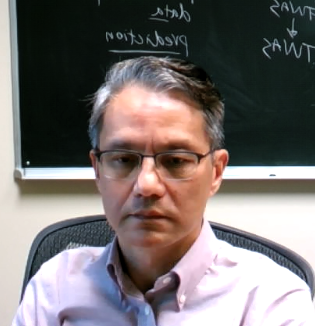
James J. Cai
Principal InvestigatorGeorge E. and Sarah F. Mudter Professor in Cancer Research
Past Members
Graduate Students
Postdocs & Research Associates
- Selim S. Romero Gonzalez — PostDoc · 2023–2026
- Ence Yang — PostDoc · 2011–2015
- Tomasz Koralewski — PostDoc · 2011–2012
- Vishnuvasan Raghuraman — Data Scientist
- Mary Xue Yu — Research Associate · 2017–2019
- Jingshu Chen — Research Associate · 2017–2019
- Ahmad Kawam — Research Associate · 2017–2018
- Aditi Kothari — Biotechnology Student · 2016–2018
- Jizhou Yang — Biotechnology Student · 2014–2015
Visiting Students/Scholars
- William Yung-Cheng Yang — Visiting PhD · 2026 · National Chung Hsing University
- Yu-Te Lin — Visiting PhD · 2021–2022 · National Taiwan University
- Eric Bo-Jia Chen — Visiting PhD · 2019–2020 · National Chung Hsing University
- Steven Guangzao Huang — Visiting PhD · 2017–2018 · Xiamen University
- Jinting Guan — Visiting PhD · 2014–2015 · Xiamen University
- Yong Zeng — Visiting PhD · 2013–2014 · Xiamen University
- Eduardo Leonardecz — Visiting Professor · 2017–2018 · U. of São Carlos
Contact & Open Positions
The Cai Lab is moving to the University of Georgia in fall 2026. We are recruiting graduate students and postdocs at the interface of single-cell biology, machine learning, and quantum computing. Please email jcai@uga.edu with your CV and a brief note on your research interests.
Our Address
Department of Biochemistry and Molecular Biology
University of Georgia, Athens, GA 30602
Email Us
Call Us
+1 706 542 1334